Glow hand poke procedure (not final)

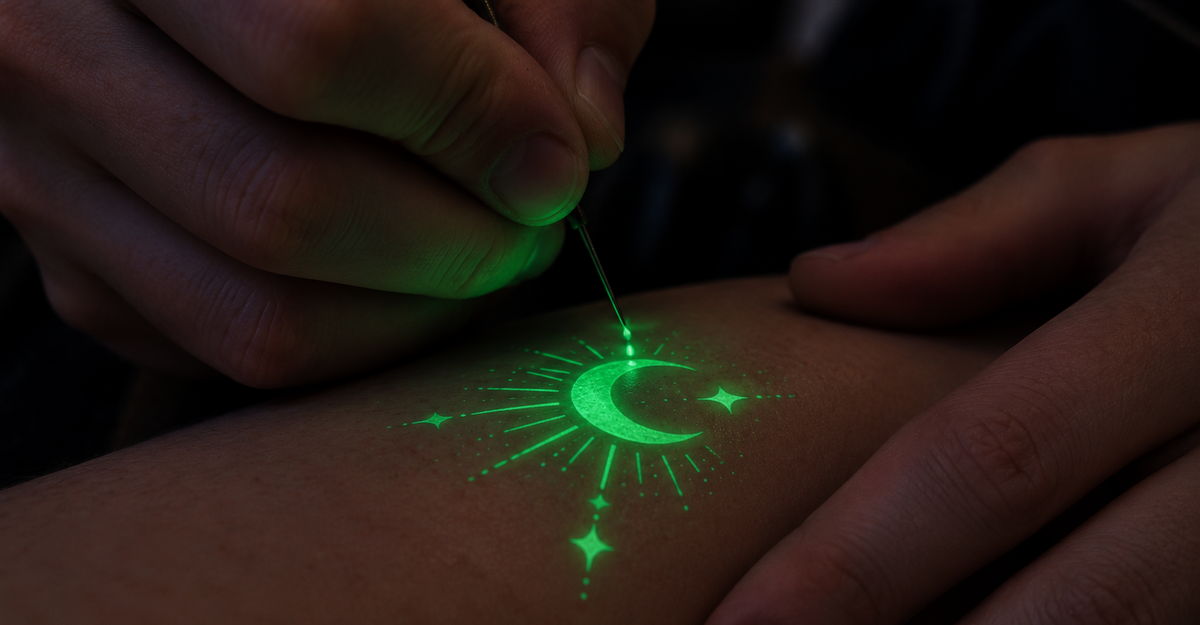
This community-created guide was kindly provided by @the.lab.rat, one of the first and major artists exploring the use of our powders in hand-poke tattoos. It will run you through the preparation, procedure, and aftercare for a glow tattoo.
Supplies and tools
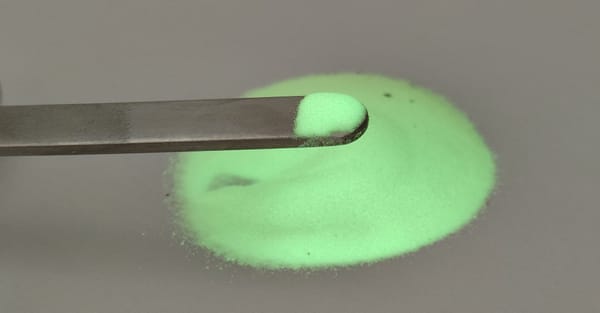
- Encapsulated glow pigment (35 micron "dust" is ideal; other sizes can also work)
- Pre-made 50/50 PGVG mix
- Razor
- Tattoo ink caps
- Paper towels
- Tattoo needles; round liners work best
- Diluted green soap or unscented antibacterial soap in a squeeze bottle
- Calcium alginate dressing
- Tattoo second skin or equivalent
- Gloves
- Moisturizer for healing; unrefined Shea butter, jojoba oil, or coconut oil work fine, but you could also use Aquaphor if you don't have any sensitivities to it
- UV light or strong flashlight
Optional
- Sterile Syringe and needle; Luer Lock style works best, a syringe without a needle is less precise
- Propylene glycol and vegetable glycerin, disposable mixing cup, and magnetic stirrer, if you decide to mix them yourself
- Tattoo stencil
- Surgical marker
Mixture preparation
Use a 50/50 mix of vegetable glycerin and propylene glycol (VGPG) as the base for your mixture. It can be bought pre-made online or can be mixed manually, which can be cheaper:
A disposable resin mixing cup and magnetic stirrer are the easiest way to mix it properly, but you can also do it by hand. A syringe can be used to move it and dose it easily.
Progressively add your VGPG to your glow powder in your ink cap until you get a thick paste. You can use a clean dental spatula or extra tattoo needle to mix the paste until it is homogeneous.
To avoid hand cramps during long sessions and to have more control over the needle, use grip tape to secure your tattoo needle to a tongue depressor.
Skin preparation
Shave the area you plan to work on and give it a wipe-down with your diluted soap mixture and pat dry with a clean paper towel. If you want to utilize a tattoo stencil or draw a design with a surgical marker, now is the time to place it. Give it a few minutes to fully dry because the PGVG mixture is really good at fading stencils.
Tattooing
Glow powder works a bit differently from common ink in that the particles are much bigger. Hence, this process is not as efficient and will require more passes than you may be used to. The more passes, the more glow will "stick".
Before you start, make sure you have a UV, "black-light", or a strong flashlight within reach, as this is the only way to check on your work.
You can now start tattooing the area you want to glow. The most effective way is to stretch the skin and poke the glow mixture in at an angle. Go over the same spot multiple times before wiping with your diluted soap and a fresh paper towel to ensure that as much pigment sticks as possible. Shine your light on it in between wipes to check your progress and make sure you're properly cleaning all of the extra pigment off. Sometimes you'll need to wipe an area multiple times between passes. Irritation and redness are totally normal, but if you see more than a drop or two of blood, you're going in a bit too deep.
Aftercare
When you're done with your design, thoroughly clean and dry the area. Place a piece of calcium alginate dressing just big enough to cover your tattoo. Then a bigger piece of second skin to hold it in place. Replace the first alginate and second skin after 1 to 2 days, and again if it gets visibly moist. Leave the tattoo wrapped for 7 to 10 days and then keep the area moisturized and out of direct sunlight until fully healed. Avoid chemically or physically exfoliating the tattooed area for at least 3 months after the procedure. Unscented soap is recommended to clean the area for the duration of the healing period.
Disclaimer: All guides, information, and advice provided by Abyss Walker are for informational and educational purposes only. Nothing published by Abyss Walker should be considered encouragement or endorsement of self-harm, unsafe practices, or illegal activities. Body modification procedures carry inherent risks. Any actions taken based on the information provided are undertaken entirely at the reader's own risk. Abyss Walker and its collaborators accept no responsibility or liability for any injury, loss, damage, or other consequences resulting from the use or misuse of this information.