Blue Glow Powder Testing: Why we're pulling it from the market (for now)
In the biohacking and body modification community, "non-toxic" is the bare minimum requirement—the real gold standard is biostability. When we test a pigment, we aren't just looking for safety data sheets; we are looking for how the material behaves under physiological stress. The "Blue" sample’s failure in the citric acid test isn't just a chemical curiosity; it’s a critical indicator that the material's crystalline lattice is susceptible to breakdown. For a subdermal implant or "glow scar" tattoo, this would lead to pigment migration, loss of luminosity, or localized tissue irritation as the material reacts with interstitial fluids.
The Acid Stress Test: Why Our "Blue" Glow Powder Failed QC
Transparency is our greatest safety mechanism. When we source materials for subdermal applications, we don't take the supplier's word at face value. We verify.
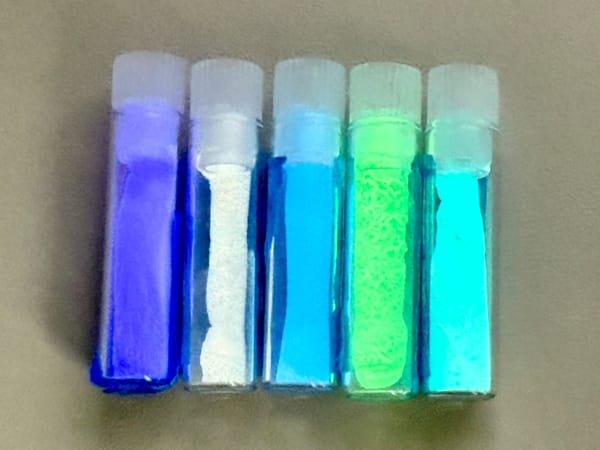
Recently, during a routine batch validation of our photoluminescent powders—specifically our Green, Aqua, and Blue varieties—we uncovered a significant discrepancy in the chemical makeup of the Blue powder. While the supplier (this affects both our US and EU suppliers) marketed it as pure Strontium Aluminate (SrAl2O4) doped with Europium and Dysprosium, our stress tests revealed a different story.
The Methodology: The Acid Stress Test
To simulate long-term stability and material purity, we subjected the powders to an "Acid Stress Test." While the human body’s internal environment is generally slightly alkaline, localized metabolic processes and the inflammatory response can create acidic micro-environments.
Lab Notes: Experimental Setup
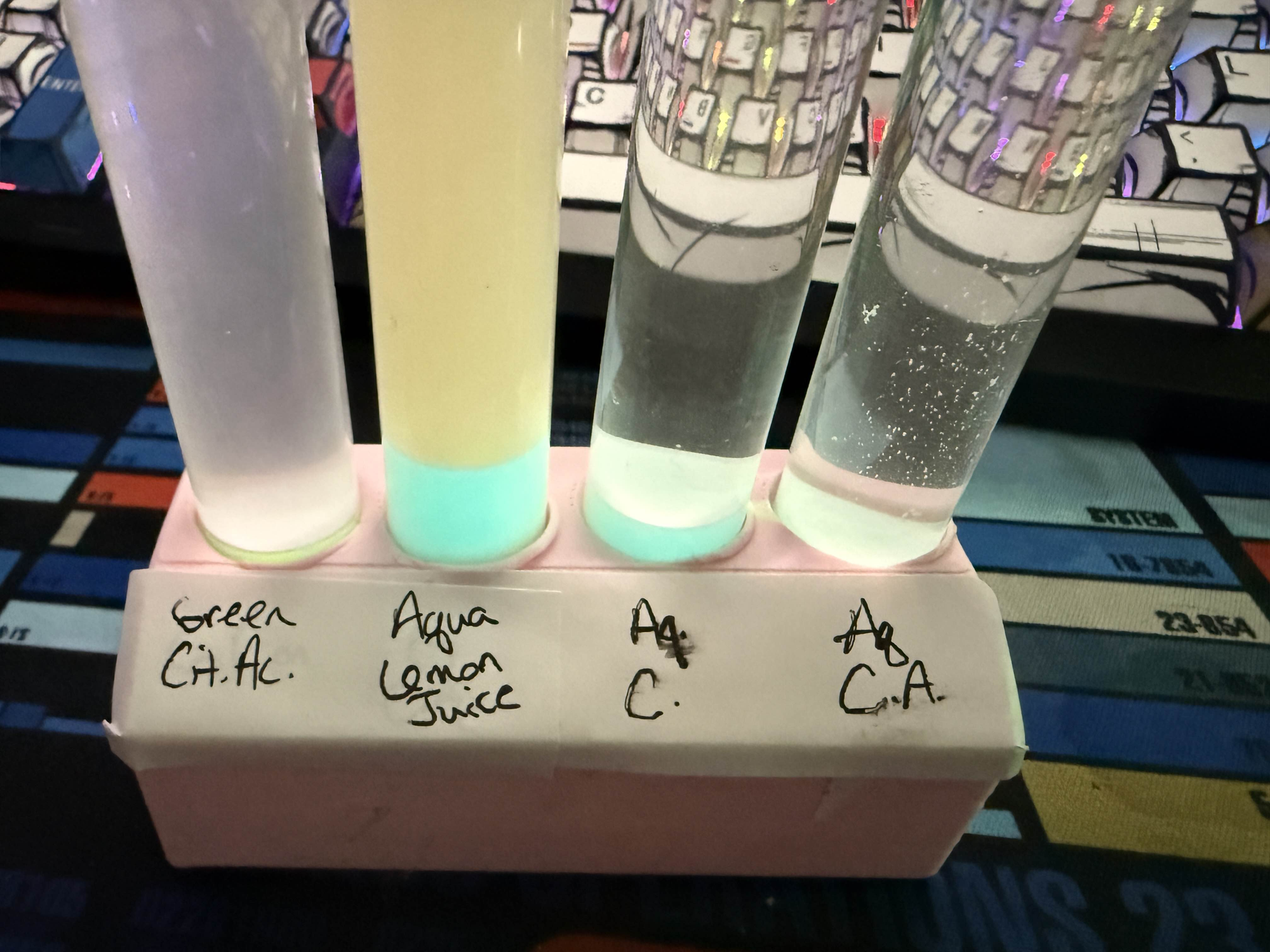
- Samples: Green, Aqua, and Blue photoluminescent powders.
- Control: Each powder mixed with distilled water in sterile test tubes.
- Variable: Each powder mixed with a concentrated solution of Pure Citric Acid and distilled water.
- Observation: Each sample was charged with a high-intensity UV source. Luminosity was measured at 15-minute intervals.
- Agitation: Samples were shaken periodically to prevent sedimentation and ensure maximum surface area exposure to the reagent.
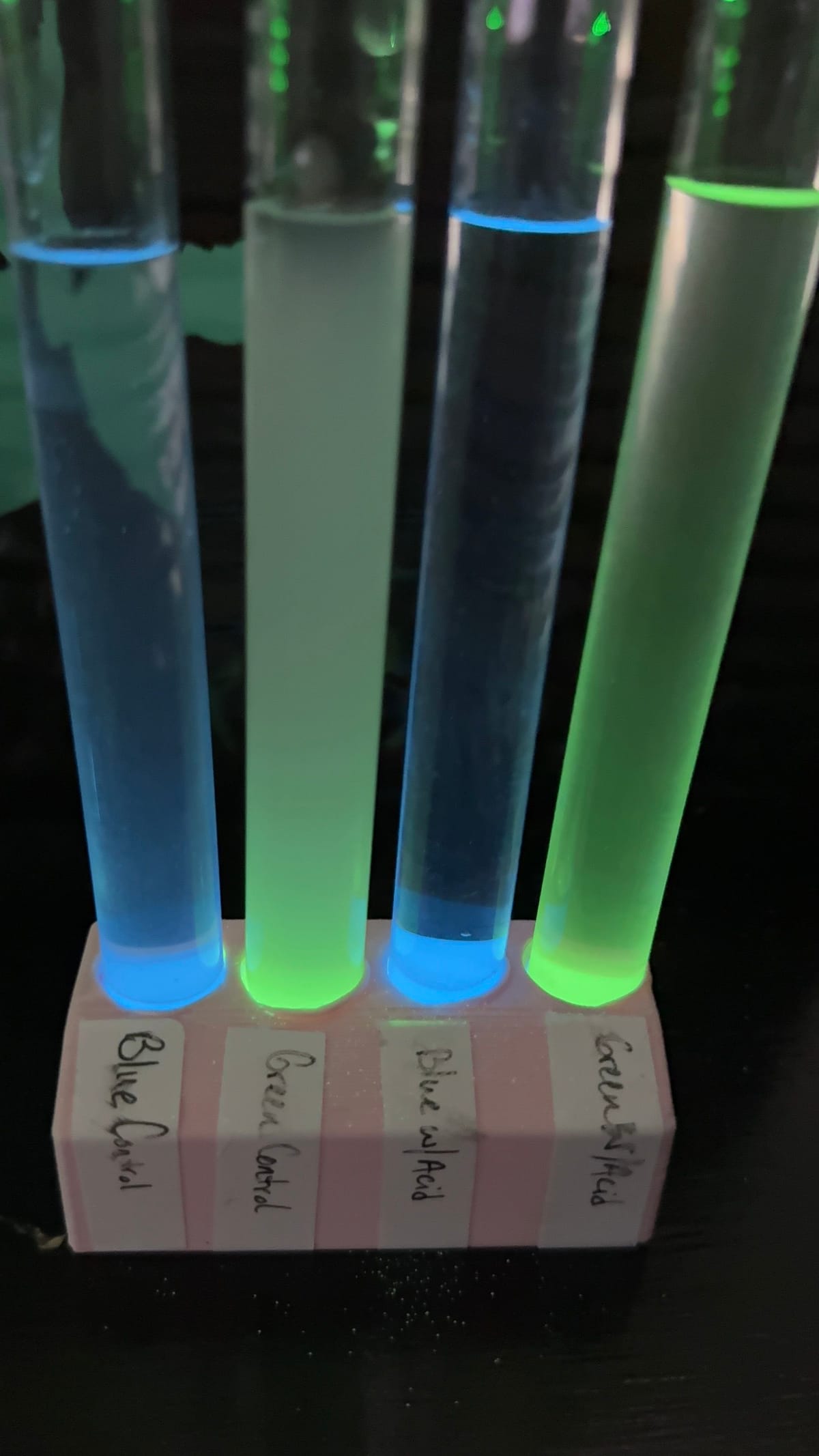
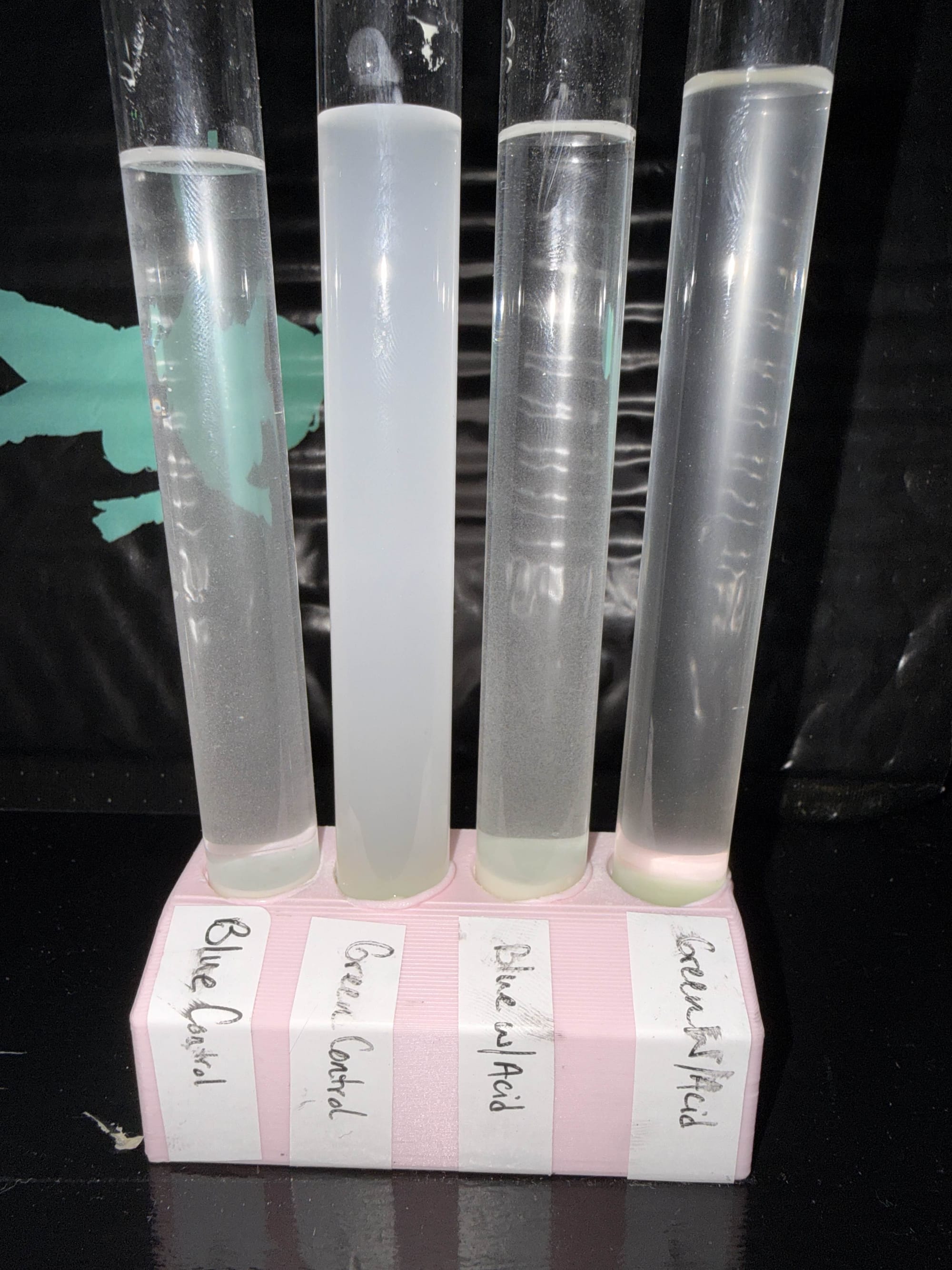
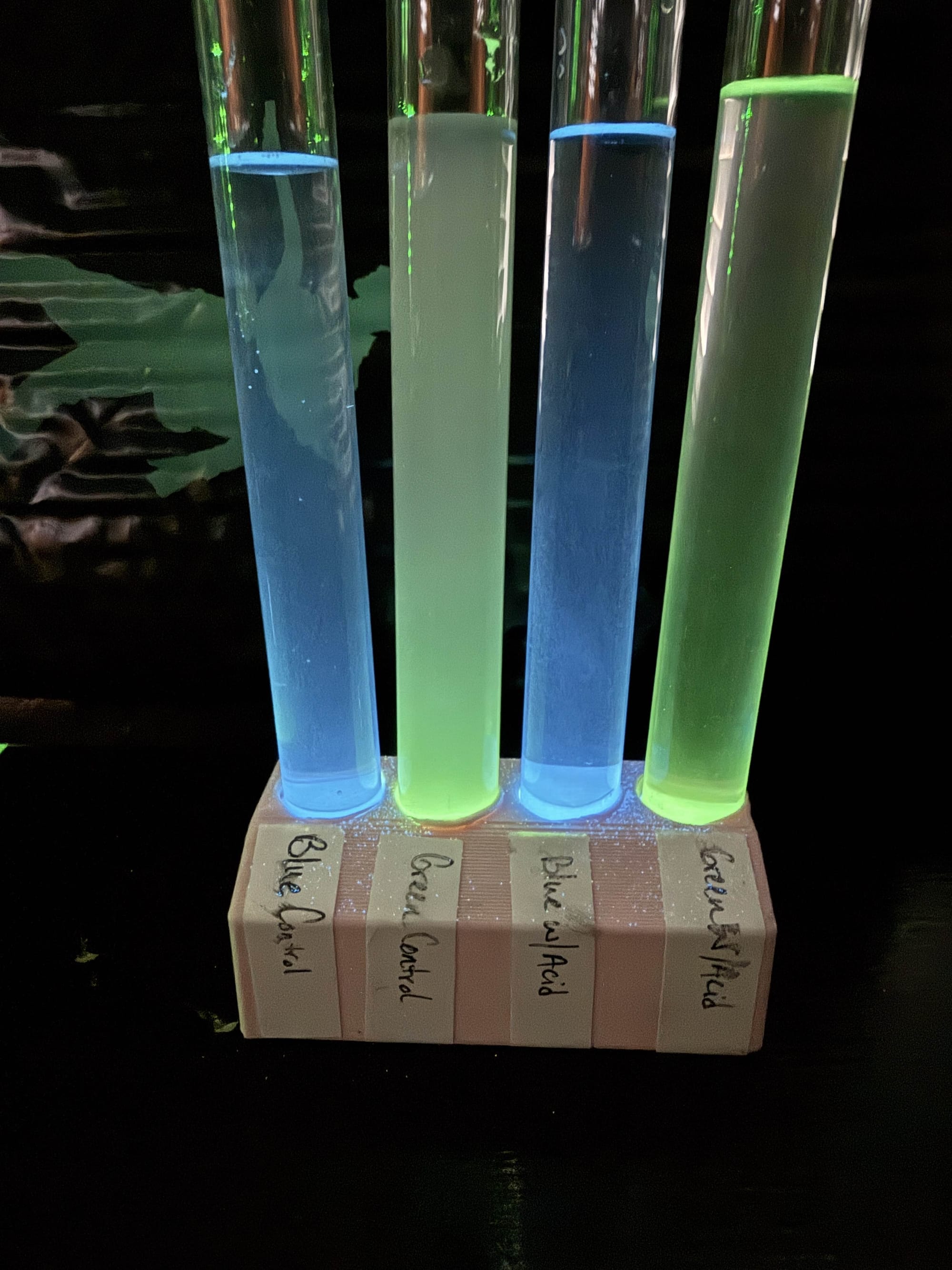
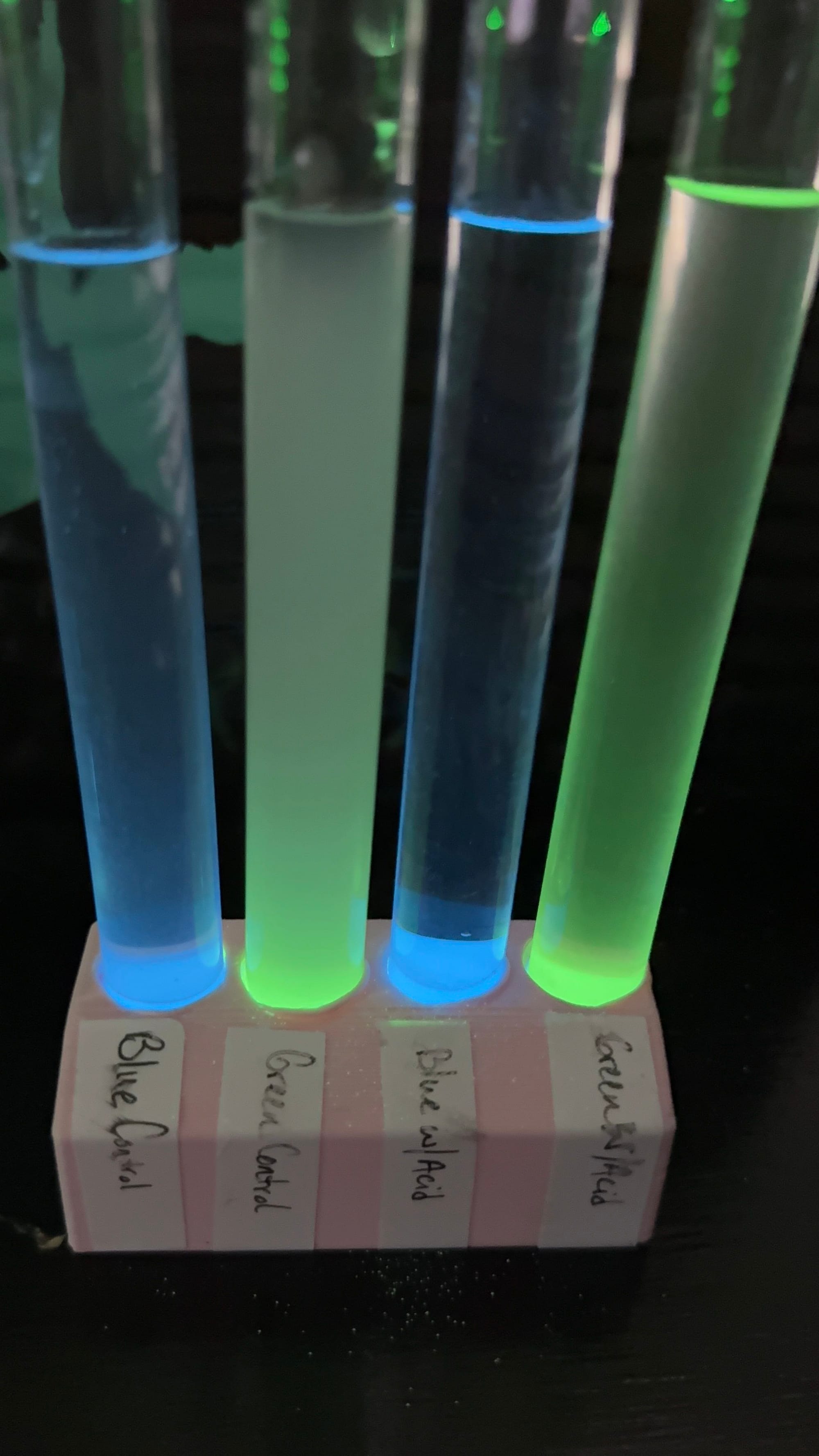
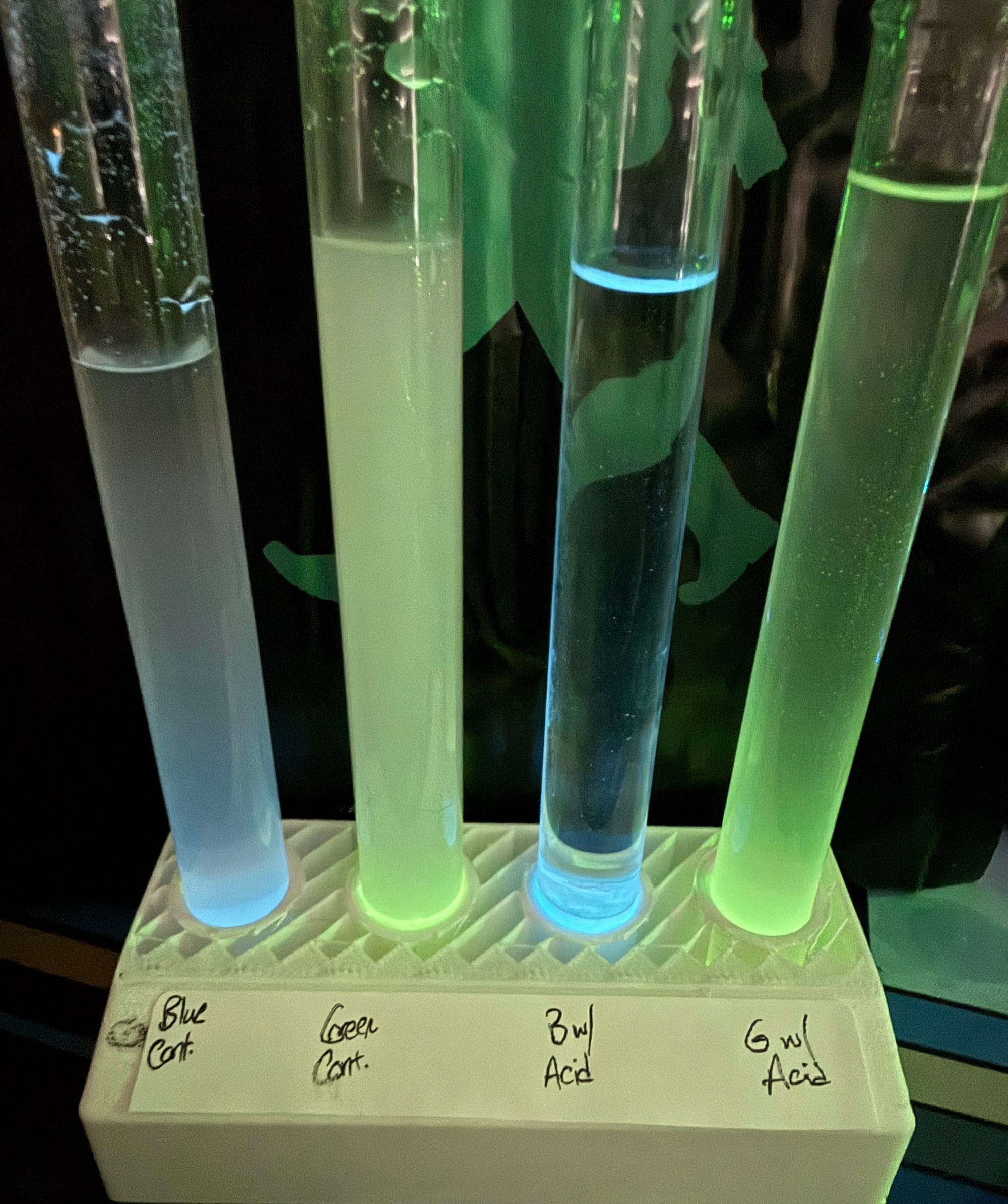
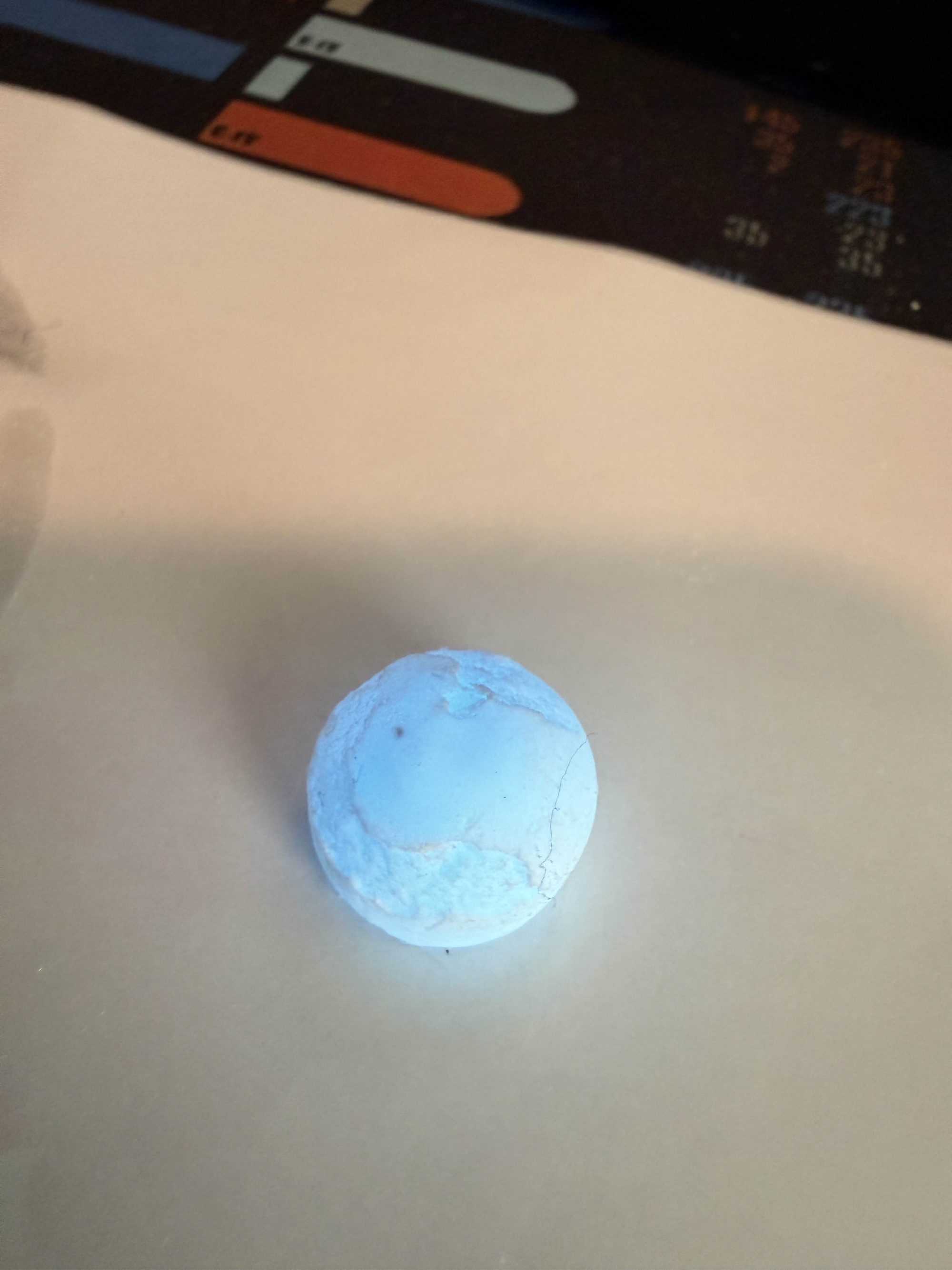
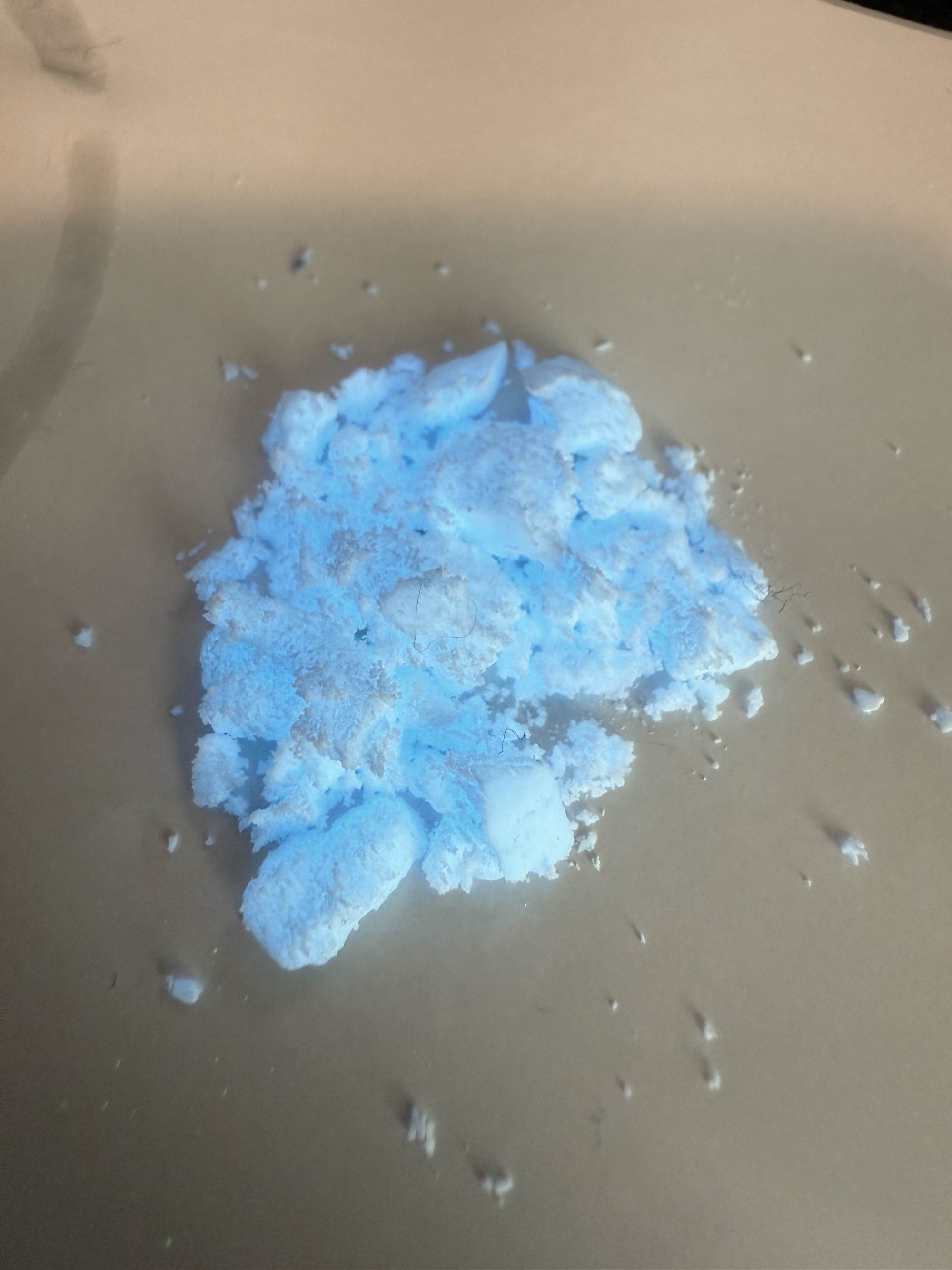
Some photos of the process:
The Discovery: The "Solid Mass" Smoking Gun
While the Green and Aqua samples remained stable, suspended in solution and maintaining high luminosity, the Blue sample exhibited a radical physical change.
Within the citric acid solution, the Blue powder began to aggregate. By the end of the observation period, it had solidified into a solid, yet crushable mass.
To further investigate, we allowed this mass to dry, then reintroduced it to pure distilled water. The mass began to dissolve back into the water. This suggests that the citric acid had reacted with the powder to form a salt (likely Calcium Citrate), which acted as a binding matrix for the mass. When placed back in water, that matrix dissolved.
The Chemistry: Strontium vs. Calcium
The reaction strongly indicates that the "Blue" powder contains Calcium Aluminate (CaAl2O4) rather than pure Strontium Aluminate.
- Strontium Aluminate: Highly stable, extremely resistant to chemical attack, and provides the longest-lasting glow.
- Calcium Aluminate: While non-toxic and used in various cements, it is significantly more reactive in acidic environments.
Why this matters for biohacking: Even if a substance is "non-toxic," chemical reactivity is a deal-breaker for implants. If a pigment reacts with organic acids, it can lose its phosphorescence, change its structural integrity, and potentially cause the "glow" to fade over time.
Moving Forward: Transparency and Safety
Biohacking is experimental. While all of us in the community aim to understand an object or substance prior to implantation, we sometimes discover oddities we may have never thought to check for in the beginning. But, now that we know blue glow powder may not be the best, bio-compatible option for now.
Here's what we're doing:
- Status of Green & Aqua: These samples passed all stability tests with flying colors. They remain available and are verified as high-purity Strontium Aluminate.
- Status of Blue: We have removed Blue as a sterile option from our store effective immediately.
- The Search: We are currently in talks with new high-specification laboratories to source a Blue powder that meets our rigorous biostability standards.
We believe that being a leader in the biohacking space means being honest about the challenges of the supply chain. We won't sell a glow powder color if it doesn't meet these standards.
Special thanks to Merlin (Abyss Walker) and Nachttänzerin (Biohackers Digital) for bringing this to my attention and partnering with me for hours to experiment and figure this out.